Graph in Data Structure
In many real-world problems, data is not just stored linearly or hierarchically. Instead, it exists in the form of relationships and connections.
For example, social networks connect people, maps connect locations, and computer networks connect devices. These types of problems cannot be efficiently represented using arrays, linked lists, or trees alone. This is where graphs become essential.
A graph is a powerful non-linear data structure used to model relationships between entities. It forms the foundation for many advanced algorithms used in routing, search engines, recommendation systems, and network analysis.
In this guide, you will learn how graphs work, how they are represented, traversal techniques like BFS and DFS, real-world applications, and how to approach graph problems effectively.
What is Graph in Data Structure
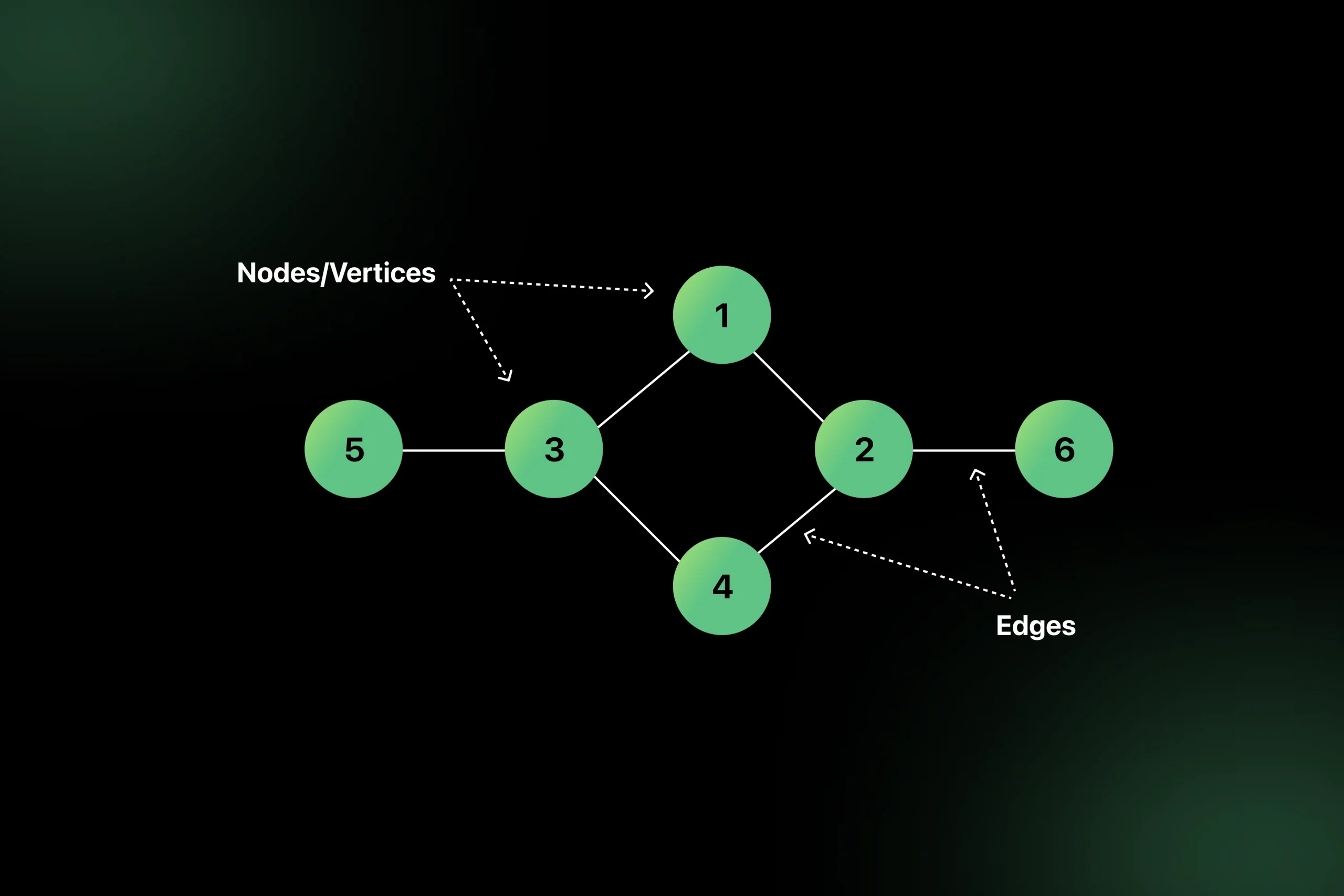
A graph is a non-linear data structure that consists of a set of nodes, also called vertices, and a set of edges that connect these nodes. Each edge represents a relationship between two vertices.
For example, in a social network, each user can be represented as a node, and friendships between users can be represented as edges.
Graphs can be classified based on the nature of connections:
- Directed Graph – Edges have direction (A → B)
- Undirected Graph – Edges have no direction (A — B)
- Weighted Graph – Edges carry a value such as distance or cost
- Unweighted Graph – Edges represent simple connections without weights
This flexibility makes graphs suitable for representing complex systems with multiple relationships.
How Graph Works Internally
Graphs work by connecting nodes through edges, forming a network-like structure. Each node maintains information about its connections, allowing traversal across the graph.
Key concepts that define graph structure include:
- Degree of a node refers to the number of edges connected to it
- Path is a sequence of nodes connected through edges
- Cycle is a path where the starting and ending nodes are the same
- Connected graph means there is a path between every pair of nodes
For example, in a map application, cities are nodes and roads are edges. Finding a route between cities involves traversing the graph.
Understanding these internal relationships is essential for solving graph-based DSA problems.
Graph Representation Techniques
Graphs can be represented in memory using two common techniques. Choosing the right representation is important for performance and efficiency.
1. Adjacency Matrix
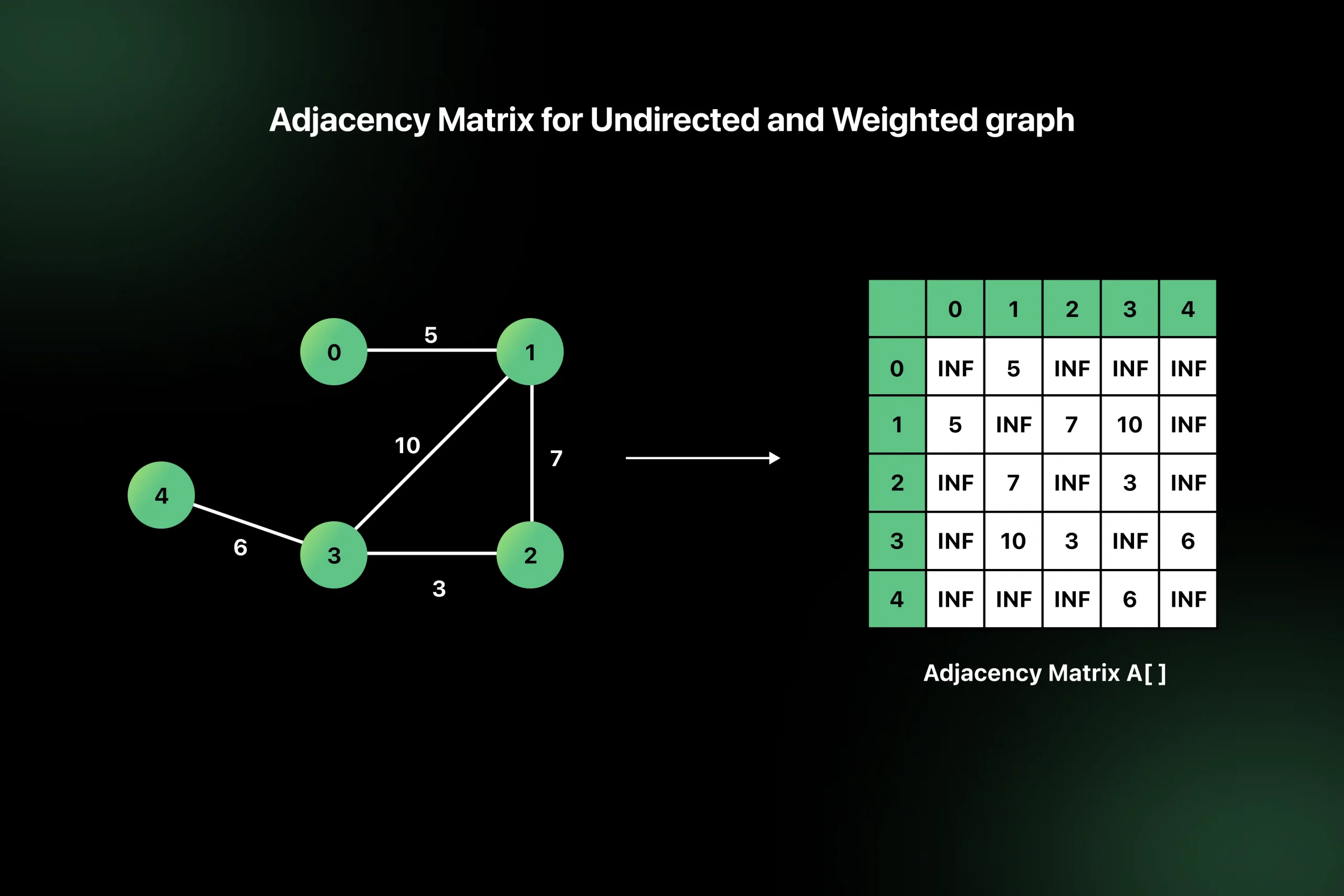
An adjacency matrix is a 2D array where rows and columns represent vertices. If there is an edge between two vertices, the corresponding cell contains a value (usually 1 or the weight).
Example:
A B C
A 0 1 1
B 1 0 0
C 1 0 0
Advantages:
- Fast edge lookup
- Simple structure
Limitations:
- Uses more memory for large graphs
2. Adjacency List
An adjacency list represents each vertex as a list of its neighboring vertices.
Example:
A → B, C
B → A
C → A
Advantages:
- Memory efficient
- Suitable for sparse graphs
Limitations:
- Slightly slower edge lookup compared to the matrix
- Adjacency lists are commonly used in real-world applications due to better space efficiency.

Types of Graphs in Data Structure
Graphs can be categorized based on their structure and properties.
- Directed Graph: Edges have a direction, used in applications like web page linking.
- Undirected Graph: Edges have no direction, used in social networks.
- Weighted Graph: Edges have values, used in shortest path problems.
- Unweighted Graph: Simple connections without weights.
- Cyclic Graph: Contains at least one cycle.
- Acyclic Graph (DAG): Contains no cycles and is used in scheduling and dependency resolution.
Understanding these types helps in selecting the correct algorithm for a problem.
Graph Traversal Techniques
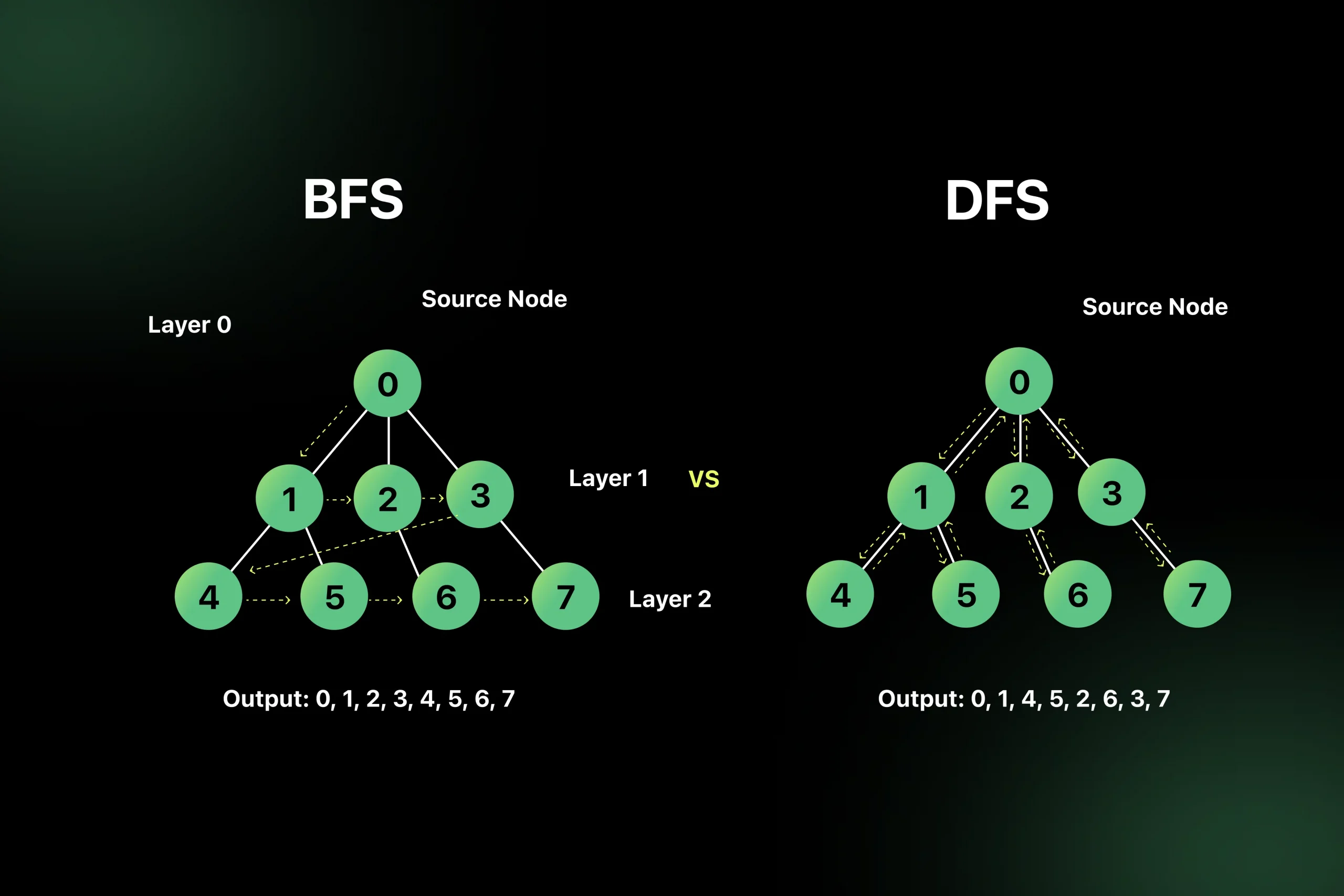
Traversal is the process of visiting all nodes in a graph. It is one of the most important concepts in graph algorithms.
1. Depth First Search (DFS)
DFS explores a graph by going as deep as possible before backtracking. It uses recursion or a stack.
Example:
void dfs(int node)
{
visited[node] = 1;
for(each neighbor)
{
if(not visited)
dfs(neighbor);
}
}
DFS is useful for:
Cycle detection
Path finding
Connected components
2. Breadth First Search (BFS)
BFS explores nodes level by level using a queue.
Example:
queue.push(start);
while(!queue.empty())
{
int node = queue.front();
queue.pop();
for(each neighbor)
{
if(not visited)
{
queue.push(neighbor);
visited[neighbor] = 1;
}
}
}
BFS is useful for:
Shortest path in unweighted graphs
Level order traversal
Network broadcasting
Basic Graph Operations
Graphs support several operations that help manage and analyze data.
Common operations include:
- Adding a vertex to represent a new node
- Adding an edge to connect two nodes
- Removing a vertex or edge
- Traversing the graph using DFS or BFS
These operations form the basis for implementing graph algorithms.
Why Graphs Are Important in DSA
Graphs are important because they model relationships between entities, which is a common requirement in real-world systems.
They help solve complex problems such as:
- Finding shortest paths
- Detecting cycles
- Network connectivity
- Data flow optimization
Graphs are also widely used in coding interviews, especially in problems related to traversal, path finding, and connectivity.
Real World Applications of Graphs
Graphs are used in many real-world systems where relationships and connections need to be modeled.
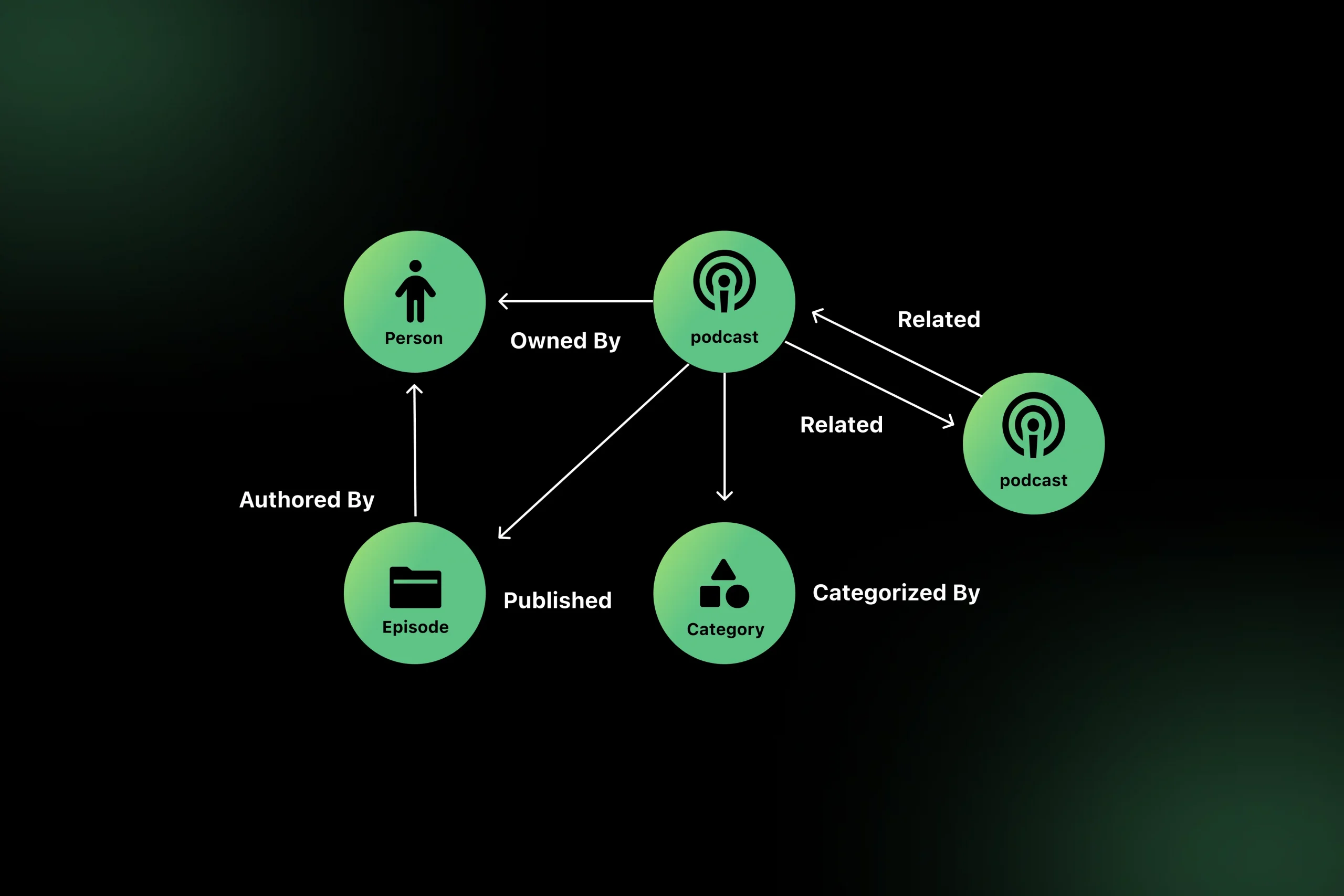
- Social Networks: Users are represented as nodes and friendships as edges.
- Navigation Systems (Google Maps): Locations are nodes, and roads are edges used for route finding.
- Computer Networks: Devices are nodes, and connections are edges.
- Recommendation Systems: Used to suggest products or content based on user connections.
- Web Page Linking: Search engines use graphs to rank pages based on links.
These applications show how graphs are essential for modeling complex relationships.
Advantages and Limitations of Graphs
Advantages
- Represents complex relationships – Ideal for modeling real-world connections
- Flexible structure – Can represent various types of data
- Supports powerful algorithms – Used in search, optimization, and routing
- Scalable for large systems – Suitable for large networks
Limitations
- Complex implementation – More difficult than linear structures
- High memory usage – Especially for dense graphs
- Traversal complexity – Requires careful handling of visited nodes
- Difficult to debug – Graph algorithms can be harder to trace
Time Complexity of Graph Traversal
Graph traversal algorithms have predictable time complexity based on the number of vertices and edges.
- DFS Time Complexity: O(V + E)
- BFS Time Complexity: O(V + E)
Where:
- V represents the number of vertices
- E represents the number of edges
This means traversal depends on the size of the graph structure.
When Should You Use Graph
Graphs should be used when problems involve relationships or connections between entities.
Use graphs when:
- Data is interconnected
- Pathfinding is required
- Network-based problems exist
- Relationships between objects are important
Avoid graphs when:
- Data is purely sequential
- No relationships exist
- Simpler structures can solve the problem
Choosing graphs correctly improves efficiency and problem-solving.
How to Identify Graph Problems
Graph problems often contain certain patterns that make them identifiable.
Common indicators include:
- References to networks or connections
- Problems involving paths or routes
- Questions about cycles or connectivity
- Traversal requirements
Recognizing these patterns helps in applying graph algorithms effectively.
Classic Graph Problems
Some important graph problems include:
- Shortest path problems (Dijkstra’s algorithm)
- Cycle detection
- Topological sorting
- Minimum spanning tree (Kruskal’s and Prim’s algorithms)
These problems are frequently asked in interviews and form the core of graph algorithms.
How to Practice Graph Problems for Placements
To master graphs, it is important to follow a structured practice approach. Start with basic traversal problems such as DFS and BFS.
Then move to intermediate problems like cycle detection and connected components. Finally, practice advanced problems such as shortest path algorithms and minimum spanning trees. Understanding graph representation and traversal is the key to solving technical problems.
Final Words
Graphs are a powerful data structure used to model relationships and connections in complex systems. They are widely used in real-world applications such as networks, maps, and recommendation systems.
Mastering graphs helps in solving advanced algorithm problems and prepares you for technical interviews. With regular practice and a strong understanding of traversal techniques, you can effectively solve graph-based problems.
FAQs
A graph is a non-linear data structure consisting of nodes and edges used to represent relationships.
Common types include directed, undirected, weighted, unweighted, cyclic, and acyclic graphs.
DFS explores deeply using recursion, while BFS explores level by level using a queue.
Graphs are used in social networks, navigation systems, computer networks, and recommendation systems.
Graph traversal using DFS or BFS takes O(V + E) time.



Aarthy is a passionate technical writer with diverse experience in web development, Web 3.0, AI, ML, and technical documentation. She has won over six national-level hackathons and blogathons. Additionally, she mentors students across communities, simplifying complex tech concepts for learners.



Aarthy is a passionate technical writer with diverse experience in web development, Web 3.0, AI, ML, and technical documentation. She has won over six national-level hackathons and blogathons. Additionally, she mentors students across communities, simplifying complex tech concepts for learners.
Related Posts
Searching Algorithm in Data Structure
Searching is one of the most fundamental operations in computer science because almost every application involves finding specific data efficiently. …
Warning: Undefined variable $post_id in /var/www/wordpress/wp-content/themes/placementpreparation/template-parts/popup-zenlite.php on line 1050
so far feels like...
