Difference Between Client-Side Scripting and Server-Side Scripting
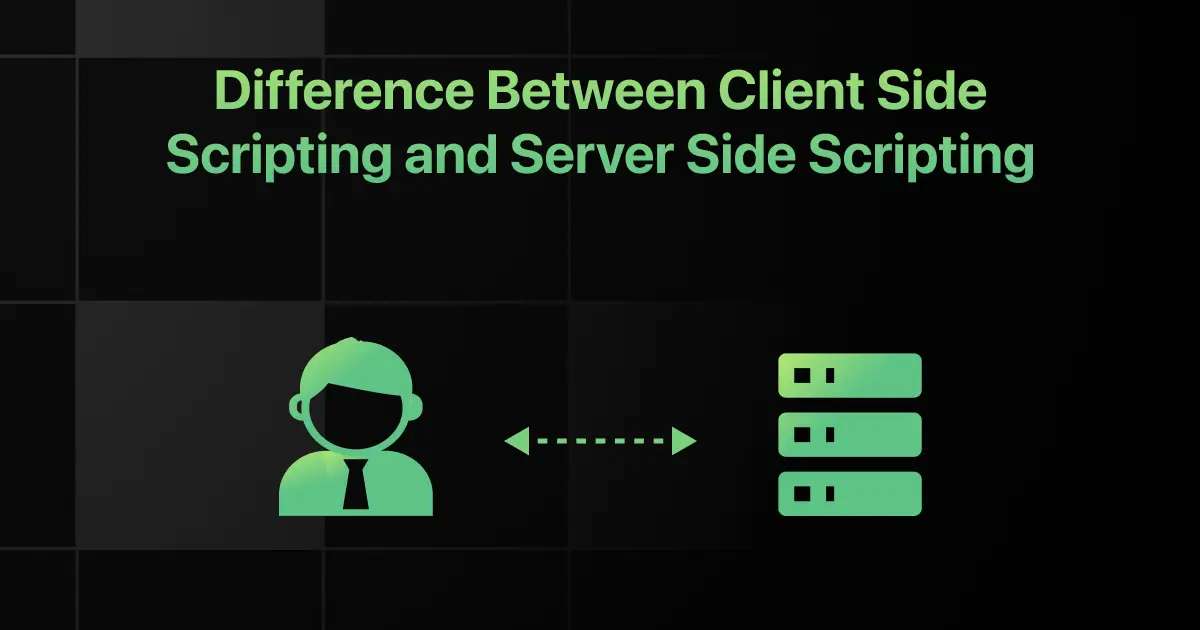
Modern websites can instantly respond to user actions while also processing secure operations like logins, payments, and database updates in the background. This is possible because web applications use both client-side and server-side scripting.
Client-side scripting improves user interaction inside the browser, while server-side scripting handles backend logic and secure data processing.
Many beginners get confused about where each script runs and what responsibilities they handle in a web application. Understanding both concepts is important for frontend development, backend systems, and full-stack development.
In this article, we will learn how client-side and server-side scripting work, their differences, real-world usage, security impact, performance behavior, and interview importance.
Why Understanding Client-Side and Server-Side Scripting Is Important
Client-side and server-side scripting are core parts of modern web technology because both work together to build dynamic and interactive websites. Client-side scripting handles browser interactions, while server-side scripting manages backend processing, authentication, and database operations.
These concepts are widely used in login systems, e-commerce platforms, online forms, streaming applications, and social media websites.
Understanding their roles is important for frontend, backend, and full-stack development. This topic is also commonly asked in interviews because it tests workflow, security, and web application understanding.

Understanding the Problem Web Scripting Solves
- Static Websites Are Limited: Static pages cannot handle user interaction, real-time updates, or personalized content efficiently.
- Need for Dynamic Interaction: Modern websites require features like login systems, search suggestions, and instant form validation.
- Improves User Experience: Scripting helps websites respond quickly to user actions without reloading entire pages.
- Supports Backend Processing: Secure operations such as authentication, payments, and database updates are handled using server-side scripting.
- Real-World Usage: E-commerce sites, streaming platforms, and dashboards rely heavily on scripting for smooth functionality.
What is Client-Side Scripting
Client-side scripting is a type of web scripting that runs directly inside the user’s browser instead of the web server. It is mainly used to create interactive and responsive web pages without reloading the entire website repeatedly.
The most commonly used client-side scripting language is JavaScript. It helps websites handle user interactions quickly and improve overall user experience.
Client-side scripting is widely used for form validation, image sliders, dark mode toggles, instant search suggestions, dropdown menus, and dynamic UI updates.
Since the processing happens inside the browser, users receive faster responses for interactive actions.
How Client-Side Scripting Works
- Step 1: The browser receives the webpage: When a user opens a website, the browser downloads the HTML, CSS, and JavaScript files from the server.
- Step 2: Scripts execute inside the browser: The browser runs the JavaScript code locally without needing constant communication with the server.
- Step 3: User interactions are handled instantly: Actions like button clicks, form validation, and menu toggles respond immediately inside the webpage.
- Step 4: The server is not contacted for every action: Many UI updates happen directly in the browser, reducing unnecessary server requests.
- Step 5: Dynamic updates improve user experience: The webpage becomes faster and more interactive because small changes can happen without full page reloads.
What is Server-Side Scripting
Server-side scripting is a type of web scripting that runs on the web server instead of the user’s browser. It is mainly responsible for processing requests, handling business logic, managing databases, and generating dynamic webpage content.
Unlike client-side scripting, users cannot directly see or access server-side code because it executes securely on the backend server. Common server-side scripting languages include PHP, Python, Node.js, Java, and Ruby.
Server-side scripting is widely used for login authentication, payment processing, user registration, database operations, order management, and API handling. It plays an important role in building secure and dynamic web applications.
How Server-Side Scripting Works
- Step 1: The user sends a request to the server: When a user submits a form, logs in, or opens a webpage, the browser sends a request to the web server.
- Step 2: The server processes the request: The server executes backend logic, validates data, and performs required database operations.
- Step 3: Dynamic content is generated: Based on the request, the server creates dynamic webpage content or retrieves required information.
- Step 4: The server sends a response back: After processing is completed, the server returns the final webpage or data to the browser.
- Step 5: The browser displays the result: The user sees the updated content, login status, dashboard, or requested information on the webpage.
Client Side Scripting vs Server Side Scripting: Quick Comparison Table
| Feature | Client Side Scripting | Server Side Scripting |
| Execution Location | Runs inside the user’s browser | Runs on the web server |
| Main Purpose | Improves user interaction and UI behavior | Handles backend logic and data processing |
| Common Language | JavaScript | PHP, Python, Node.js, Java, Ruby |
| Server Requirement | Does not require server processing for every action | Requires server execution |
| Speed | Faster for UI interactions | Slower for complex backend operations |
| Security | Less secure because the code is visible in the browser | More secure because the code stays on the server |
| Database Access | Cannot directly access databases securely | Directly interacts with databases |
| User Experience | Provides instant feedback and dynamic updates | Generates dynamic content and manages backend operations |
| Examples | Form validation, sliders, dark mode | Login authentication, payments, and database updates |
| Internet Dependency | Some actions work without contacting the server | Requires communication with the server |
Real-World Example of Both Working Together
Social media platforms use both client-side and server-side scripting to provide smooth and interactive user experiences.
On the client side, scripting handles instant user interactions directly inside the browser. For example:
- notification popups appear instantly,
- likes animate immediately when users click the button,
- and comment previews update dynamically without reloading the page.
On the server side, scripting handles backend operations securely. The server stores posts and comments in the database, authenticates users during login, and fetches personalized feeds based on user activity.
Both scripting types work together continuously to make social media applications fast, responsive, and secure.
Advantages and Disadvantages of Client-Side & Server-Side Scripting
| Type | Advantages | Disadvantages |
| Client Side Scripting |
|
|
| Server Side Scripting |
|
|
Client Side vs Server Side Validation
Validation is used to check whether user input is correct, complete, and safe before processing the data.
Modern web applications use both client-side and server-side validation together to improve user experience and security.
- Client-Side Validation: Validation happens directly inside the browser before data is sent to the server. It provides instant feedback for errors like empty fields, invalid email formats, or weak passwords.
- Server-Side Validation: Validation happens on the server after the request is received. It securely verifies data before storing it in the database or processing important operations.
Client-side validation improves speed and user experience, while server-side validation protects applications from invalid or malicious data. Most secure websites use both validation methods together.
Real Applications of Client-Side and Server-Side Scripting
- E-commerce Websites: Client-side scripting handles cart updates and product filtering, while server-side scripting manages payments, orders, and inventory.
- Banking Applications: Client-side scripting improves user interaction, while server-side scripting securely processes transactions and account details.
- Online Learning Platforms: Client-side scripting manages quizzes and UI updates, while server-side scripting stores progress and manages authentication.
- Streaming Services: Client-side scripting controls video playback and recommendations, while server-side scripting handles subscriptions and content delivery.
- Social Media Platforms: Client-side scripting updates likes and comments instantly, while server-side scripting stores posts and manages feeds.
- Booking Systems: Client-side scripting improves form interactions, while server-side scripting manages seat availability and booking confirmation securely.
Common Mistakes Beginners Make While Learning Scripting
- Thinking JavaScript Is Only Frontend: JavaScript is widely used for both client-side and server-side development through technologies like Node.js.
- Confusing Browser and Server Execution: Many beginners struggle to understand where the code actually runs and how requests are processed.
- Ignoring Server-Side Validation: Client-side validation improves user experience, but secure validation must also happen on the server.
- Memorizing Differences Only: Learning definitions without understanding request-response flow creates confusion during practical development.
- Not Connecting with Real Applications: Understanding e-commerce websites, login systems, and payment platforms makes scripting concepts easier to learn.
How Client Side vs Server Side Scripting Is Asked in Interviews
- Difference-Based Questions: Interviewers commonly ask about the differences between frontend and backend scripting responsibilities.
- Security Discussions: Questions often focus on why authentication and sensitive operations happen on the server side.
- Performance Scenarios: Companies may ask which scripting type is faster for specific operations or user interactions.
- Real-World Examples: Candidates are expected to explain how both scripting types work together in web applications.
- Frontend vs Backend Roles: Interviews often test understanding of browser-side functionality and server-side processing separately.
Best Way to Learn Client-Side and Server-Side Scripting
- Build Small Frontend Projects: Create forms, interactive pages, and UI components using client-side scripting.
- Learn Backend Basics: Practice handling requests, APIs, and database operations using server-side technologies.
- Practice Form Validation: Understand both client-side validation for user experience and server-side validation for security.
- Understand Request-Response Flow: Learn how browsers communicate with servers during web application execution.
- Create Mini Full Stack Projects: Combining frontend and backend concepts improves practical understanding significantly.
- Use Placement Preparation Resources: PlacementPreparation.io provides web development MCQs, frontend and backend interview questions, JavaScript practice resources, and company-specific preparation content.
Final Words
Client-side scripting improves interactivity and user experience, while server-side scripting handles secure processing and database operations. Both work together to build modern web applications efficiently.
Understanding execution flow and real-world application behavior is more important than memorizing theoretical differences.
FAQs
Client-side scripting runs in the browser, while server-side scripting runs on the web server to process backend operations.
JavaScript is the most commonly used language for client-side scripting in modern web development.
Server-side code runs on the server and remains hidden from users, making sensitive operations more secure.
Yes, JavaScript can be used for server-side scripting using technologies like Node.js.
Websites use both to improve user interaction while securely handling backend logic and database operations.
Client-side scripting is usually faster for UI interactions because processing happens directly inside the browser.
Interviewers commonly ask workflow differences, security concepts, real-world examples, and frontend-backend responsibility questions.



Aarthy is a passionate technical writer with diverse experience in web development, Web 3.0, AI, ML, and technical documentation. She has won over six national-level hackathons and blogathons. Additionally, she mentors students across communities, simplifying complex tech concepts for learners.



Aarthy is a passionate technical writer with diverse experience in web development, Web 3.0, AI, ML, and technical documentation. She has won over six national-level hackathons and blogathons. Additionally, she mentors students across communities, simplifying complex tech concepts for learners.
Related Posts

Difference Between Greedy and Dynamic Programming
When solving optimization problems, programmers often face situations where multiple choices are available at every step. Choosing the right approach …
Warning: Undefined variable $post_id in /var/www/wordpress/wp-content/themes/placementpreparation/template-parts/popup-zenlite.php on line 1050
so far feels like...
