BTS, Heap & Map in Data Structure

As data grows in size and complexity, basic data structures like arrays and linked lists are often not enough for efficient operations.
Real-world applications require faster searching, structured storage, and priority-based processing, which is where advanced data structures like Binary Search Tree (BST), Heap, and Map become important.
Each of these structures solves a specific problem, such as searching, priority handling, and key-value lookup.
In this article, you will learn how BST, Heap, and Map work, their differences, and when to use each for solving problems effectively.
Why Do We Need BST, Heap, and Map
In practical scenarios, different types of operations require different data structures to achieve optimal performance. Choosing the correct data structure reduces time complexity and improves efficiency.
For example, when you need to frequently search and maintain data in sorted order, a Binary Search Tree provides a better solution than a simple array.
When tasks must be processed based on priority, such as scheduling jobs or handling requests, a Heap ensures that the highest priority task is processed first.
When fast lookup of data using unique keys is required, such as retrieving user information by ID, a Map provides constant-time access in most cases.
These data structures are specifically designed to handle different categories of problems, and selecting the right one plays a key role in building efficient algorithms.
What is a Binary Search Tree (BST)
A Binary Search Tree is a special type of binary tree that follows a strict ordering rule. For every node in the tree, all values in the left subtree are smaller than the node, and all values in the right subtree are greater than the node.
This property allows efficient searching because at each step, half of the remaining elements can be ignored. As a result, BST significantly improves search performance compared to linear data structures.
Basic structure:
struct Node {
int data;
Node* left;
Node* right;
};
A Binary Search Tree is commonly used in applications where sorted data and fast lookup operations are required.
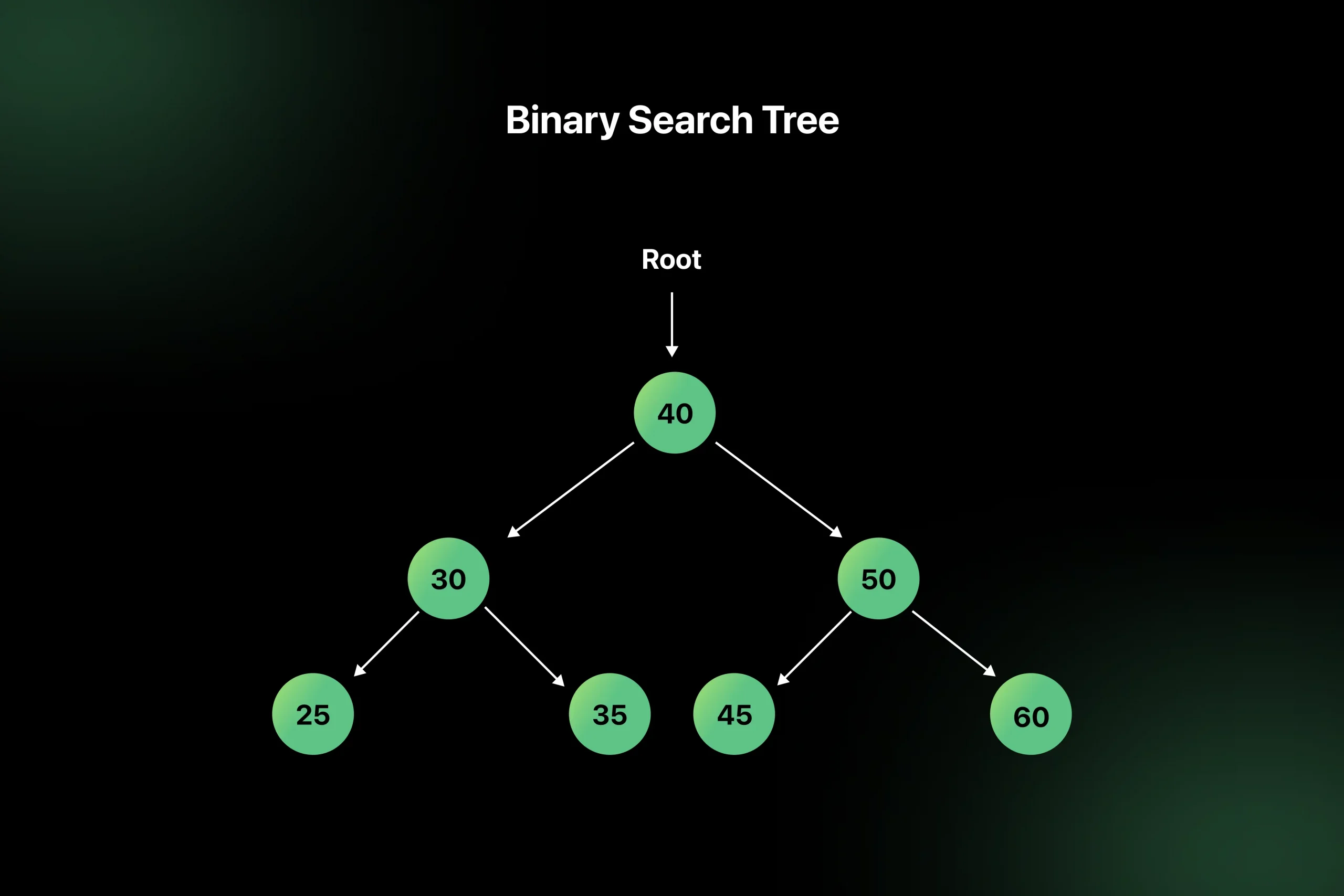
How BST Works Internally
The working of a Binary Search Tree is based on comparisons between values. When inserting a new element, it is compared with the root node. If the value is smaller, it moves to the left subtree, and if the value is larger, it moves to the right subtree.
This process continues recursively until the correct position is found.
For example, inserting values 50, 30, and 70 results in a structure where 50 becomes the root node, 30 is placed on the left, and 70 is placed on the right. Searching follows the same logic, which makes the operation efficient.
However, if elements are inserted in sorted order, the tree may become unbalanced and behave like a linked list. In such cases, the time complexity can degrade to linear time, which is why balanced trees are preferred in real-world applications.
What is a Heap in Data Structure
A Heap is a complete binary tree that satisfies a specific ordering property known as the heap property. It is mainly used for priority-based operations rather than searching.
There are two main types of heaps:
- Max Heap, where the value of each parent node is greater than or equal to its children
- Min Heap, where the value of each parent node is smaller than or equal to its children
The key idea behind a heap is that the highest or lowest priority element is always stored at the root of the tree, making it easily accessible.
Heaps are widely used in implementing priority queues and solving optimization problems.
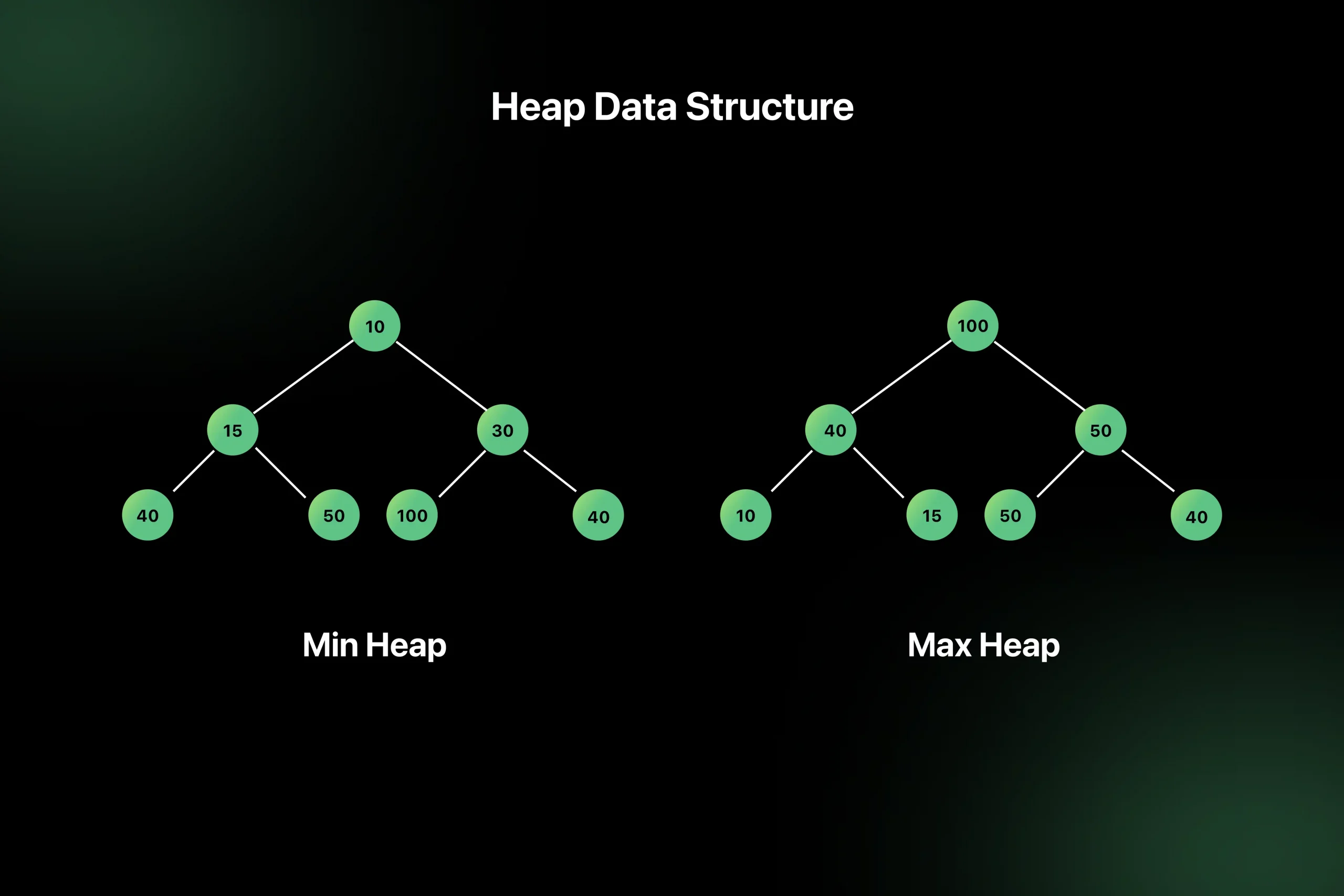
How Heap Works Internally
Heap operations are designed to maintain the heap property after every insertion or deletion. When a new element is inserted, it is placed at the last position of the tree to maintain completeness. It is then moved upward through a process called heapify-up until the heap property is restored.
When the root element is removed, the last element replaces it, and then it is moved downward through a process called heapify-down. This ensures that the structure remains a valid heap.
Because of these operations, heaps allow efficient insertion and deletion while always keeping the highest or lowest priority element at the top.

What is Map in Data Structure
A Map is a data structure that stores data in key-value pairs, where each key is unique and is used to access its corresponding value. This structure allows efficient storage and retrieval of data based on keys.
For example, a Map can store employee IDs as keys and employee details as values. This makes it easy to retrieve information without searching through the entire dataset.
Maps are commonly implemented using hash tables or tree-based structures, depending on whether speed or ordering is required.
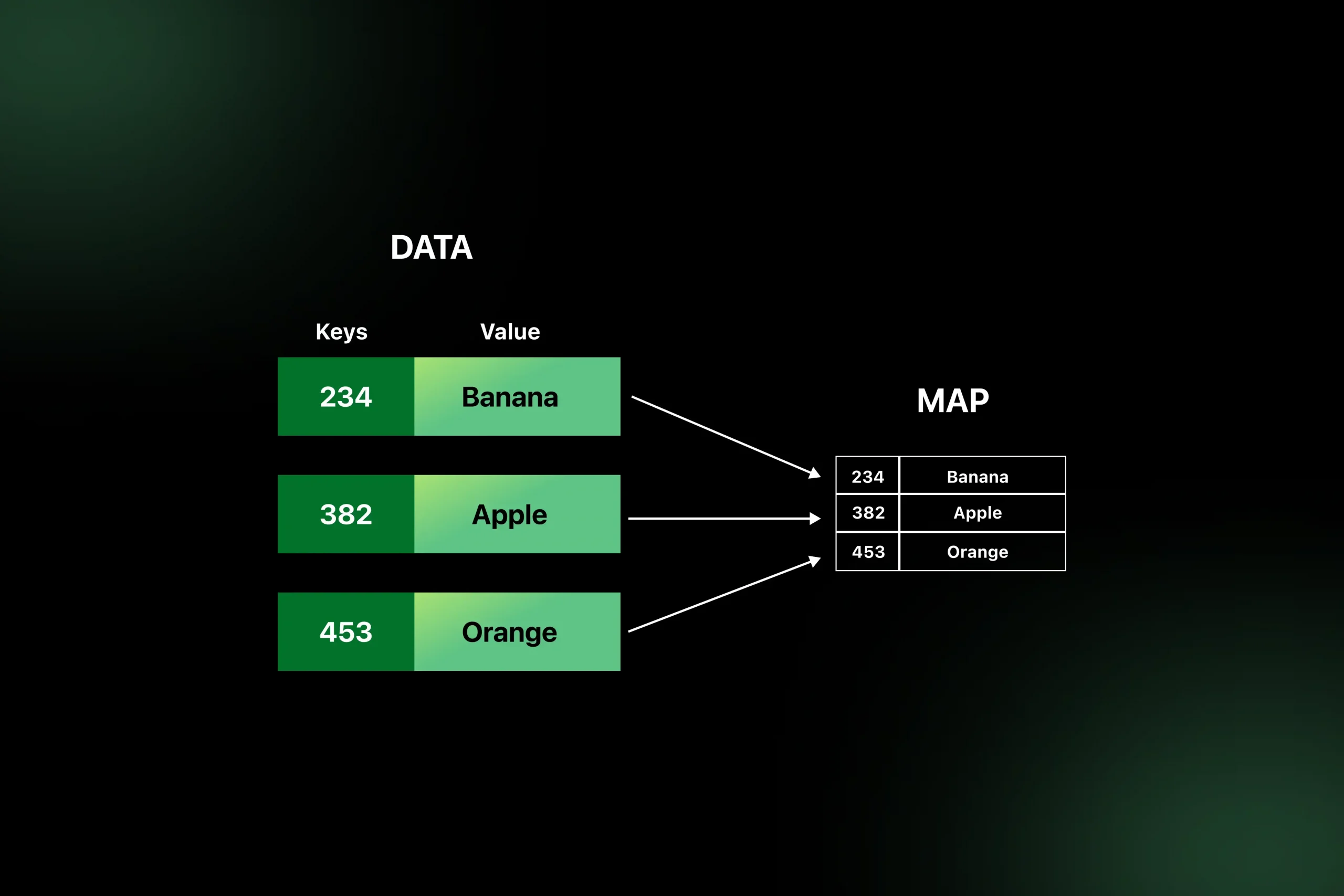
How Map Works Internally
Maps work by associating each key with a specific value. In hash-based maps, a hash function converts the key into an index where the value is stored. This allows constant-time lookup in most cases.
In tree-based maps, keys are stored in sorted order using balanced trees. This ensures ordered traversal but results in slightly higher time complexity compared to hash maps.
When multiple keys produce the same index in a hash map, a situation known as a collision occurs. This is handled using techniques such as chaining or open addressing to ensure correct data storage and retrieval.
Key Differences Between BST, Heap, and Map
| Feature | BST | Heap | Map |
| Purpose | Efficient searching | Priority handling | Key-value lookup |
| Structure | Binary tree | Complete binary tree | Hash table / Tree |
| Ordering | Fully sorted | Partially ordered | Key-based |
| Access | O(log n) | O(1) for root | O(1)/O(log n) |
This comparison highlights how each data structure is designed for a specific type of operation.
Why These Data Structures Are Important in DSA
Binary Search Trees, Heaps, and Maps are essential for solving complex problems efficiently. They help reduce time complexity and provide optimized solutions for real-world scenarios.
BST is useful for search-based problems where sorted data is required. Heap is important for handling priority-based tasks such as scheduling and resource allocation. Map is widely used for fast data retrieval and frequency counting.
These data structures are also commonly used in coding interviews, making them important for placement preparation.
Real World Applications
These data structures are widely used in real-world systems where performance and efficiency are critical.
- Binary Search Trees are used in database indexing systems because they allow efficient searching, insertion, and deletion of sorted data.
- Heaps are used in CPU scheduling and task management systems where processes need to be executed based on priority rather than arrival time.
- Heaps are also used in priority queues for applications such as job scheduling and event-driven simulations.
- Maps are used in caching systems to store and retrieve frequently accessed data using keys, improving system performance.
- Maps are widely used in API data handling and session management, where a quick lookup of user information is required.
- Binary Search Trees are used in search-based applications to maintain ordered data and support efficient queries.
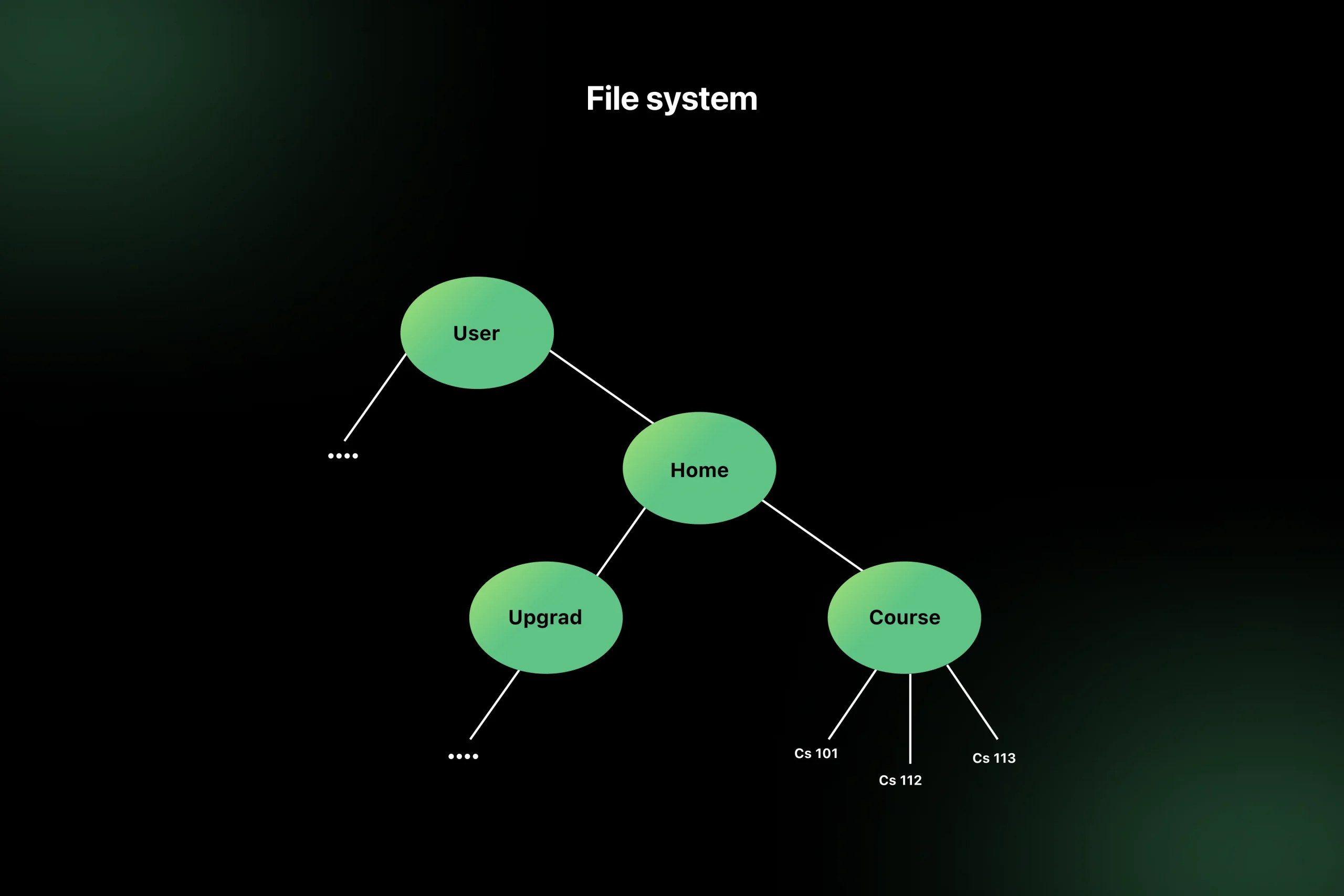
Advantages and Limitations
| Data Structure | Advantages | Limitations |
| Binary Search Tree (BST) |
|
|
| Heap |
|
|
| Map |
|
|
Time Complexity Comparison
| Operation | BST | Heap | Map |
| Search | O(log n) | O(n) | O(1)/O(log n) |
| Insert | O(log n) | O(log n) | O(1)/O(log n) |
| Delete | O(log n) | O(log n) | O(1)/O(log n) |
Balanced BST ensures logarithmic performance, while maps can provide constant-time access in average cases.
When to Use BST vs Heap vs Map
Choosing the correct data structure depends on the problem requirement.
Use a Binary Search Tree when:
- You need to maintain data in sorted order
- Frequent search operations are required
- Range queries are important
Use a Heap when:
- You need to process elements based on priority
- You need quick access to the minimum or maximum elements
- You are solving scheduling or optimization problems
Use a Map when:
- You need a fast lookup using unique keys
- You are performing frequency counting
- You need efficient data retrieval
Final Words
Binary Search Tree, Heap, and Map are powerful data structures designed to solve different types of problems efficiently. While BST focuses on searching and maintaining sorted data, a heap is used for priority-based processing, and Map provides fast key-value access.
Understanding their behavior, advantages, and use cases helps in selecting the right data structure for a given problem. These structures are widely used in real-world applications and coding interviews. Mastering them improves problem-solving skills and prepares you for advanced algorithm topics.
FAQs
Binary Search Tree (BST) is used for efficient searching and maintaining sorted data, Heap is used for priority-based operations, and Map is used for storing key-value pairs for fast data lookup.
You should use a Heap when you need quick access to the highest or lowest priority element, such as in scheduling or finding top K elements, rather than searching sorted data.
A Map implemented using a hash table provides O(1) average lookup time, while a BST typically provides O(log n) time, making Map faster for direct key-based access.
Heap is not suitable for general searching because it only guarantees order between parent and child nodes, not across all elements.
These data structures help solve different types of problems efficiently, such as searching, priority handling, and fast data retrieval, and are commonly used in coding interviews and real-world applications.



Aarthy is a passionate technical writer with diverse experience in web development, Web 3.0, AI, ML, and technical documentation. She has won over six national-level hackathons and blogathons. Additionally, she mentors students across communities, simplifying complex tech concepts for learners.



Aarthy is a passionate technical writer with diverse experience in web development, Web 3.0, AI, ML, and technical documentation. She has won over six national-level hackathons and blogathons. Additionally, she mentors students across communities, simplifying complex tech concepts for learners.
Related Posts

Searching Algorithm in Data Structure
Searching is one of the most fundamental operations in computer science because almost every application involves finding specific data efficiently. …


Warning: Undefined variable $post_id in /var/www/wordpress/wp-content/themes/placementpreparation/template-parts/popup-zenlite.php on line 1050
so far feels like...
