Web Application Architecture Explained

Every website and web application is built on a structured foundation that defines how different components communicate with each other. Without a proper structure, handling user requests, storing data, and delivering responses efficiently would not be possible.
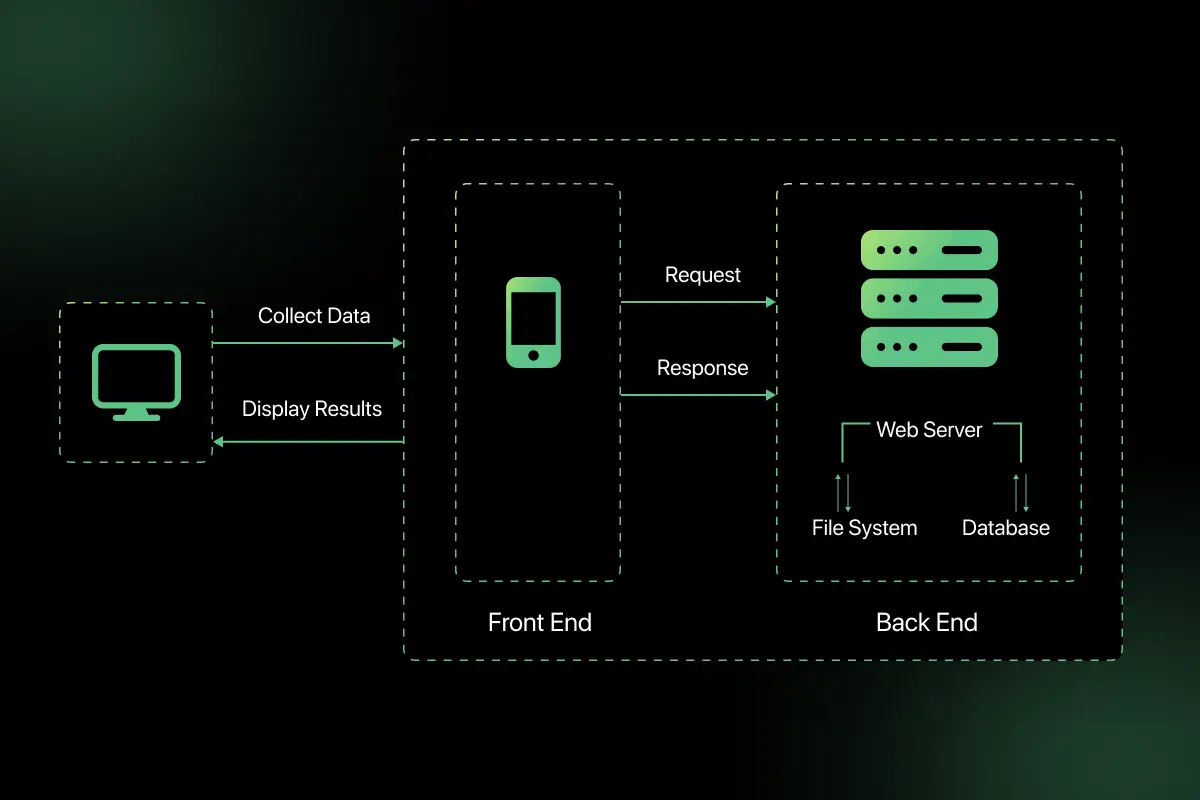
Web application architecture defines how the client, server, and database interact to process requests and deliver content. It outlines the flow of data from the user interface to backend services and finally to the data storage layer.
A well-designed architecture ensures scalability as traffic grows, strengthens security by separating layers, and improves overall performance.
In this guide, you will clearly understand the layers, working flow, types, and real-world use cases of web application architecture.
What is Web Application Architecture?
Web application architecture is the structural design that defines how different components of a web application interact to process user requests and deliver responses.
It outlines the relationship between the client interface, server logic, and data storage.
- Structural Design of Web-Based Applications: It provides a blueprint for organizing frontend, backend, and database components. This structure ensures that each part of the application has a clear role and responsibility.
- Interaction Between Frontend, Backend, and Database: The frontend handles user interaction, the backend processes business logic, and the database stores and retrieves data. These components communicate in a structured manner to complete user actions.
- How User Requests Are Processed: When a user acts, the request moves from the browser to the server, where it is processed and validated. The server then interacts with the database if needed and returns the final response to the user interface.
Core Components of Web Application Architecture
Web application architecture consists of multiple components that work together to handle user requests efficiently.
Each component has a specific role in processing and delivering responses.
- Client or Browser: The client, usually a web browser or mobile application, is the interface through which users interact with the system. It sends requests to the server and displays the responses received in the form of web pages or data.
- Web Server: The web server receives incoming HTTP requests from clients. It serves static content such as HTML, CSS, and images, and forwards dynamic requests to the application server for further processing.
- Application Server: The application server contains the business logic of the application. It processes user requests, performs validations, interacts with the database, and prepares the response to be sent back to the client.
- Database Server: The database server stores, retrieves, and manages application data. It executes queries sent by the application server and ensures data consistency and integrity.
- Network and Load Balancer: The network enables communication between all components. A load balancer distributes incoming traffic across multiple servers to improve availability, reliability, and performance during high traffic conditions.

Layers of Web Application Architecture
Web application architecture is commonly organized into layers to separate responsibilities and improve scalability, security, and maintainability.
Each layer performs a specific function in processing user requests.
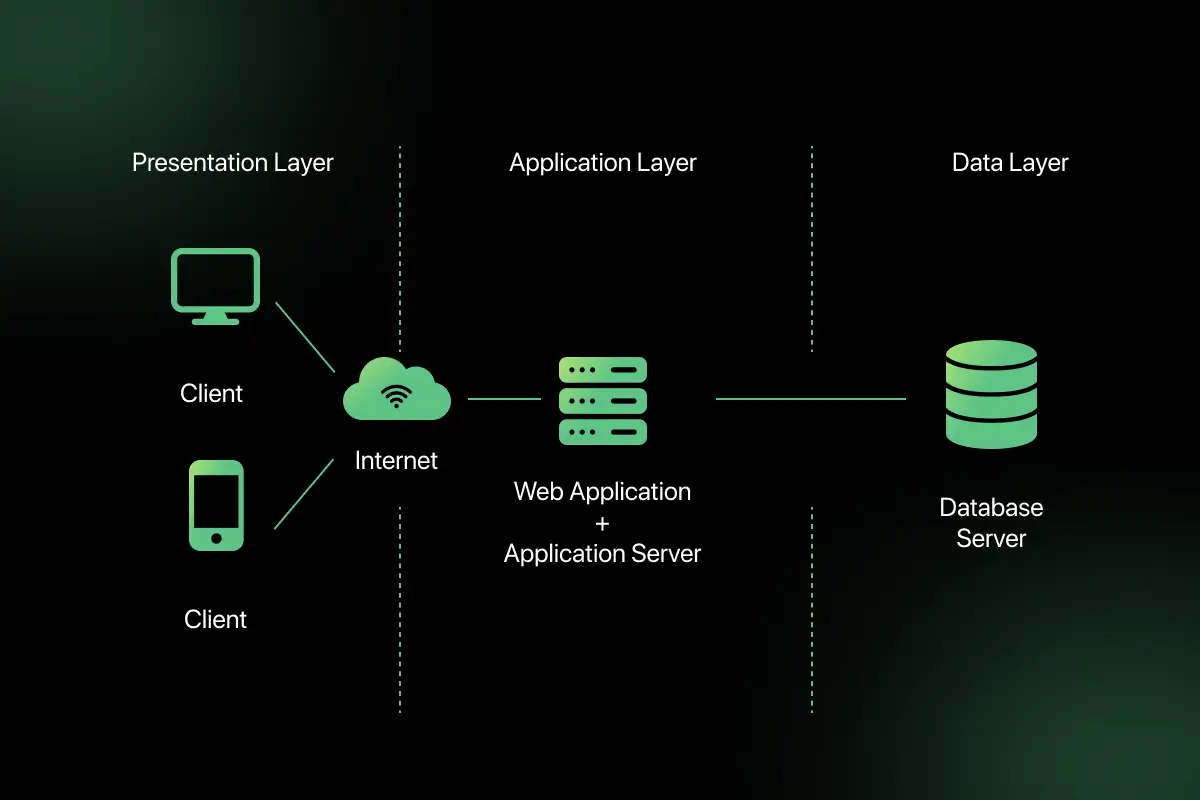
- Presentation Layer: The presentation layer is the user interface of the application. It includes web pages, forms, and client-side scripts that users interact with. This layer collects user input and displays the response received from the server.
- Application Layer: The application layer contains the business logic of the system. It processes user requests, applies rules and validations, and determines how data should be handled. This layer acts as a bridge between the presentation layer and the data layer.
- Data Layer: The data layer manages data storage and retrieval. It interacts with the database server to execute queries, store information, and return results to the application layer. This separation ensures secure and organized data management.
Web Application Architecture Diagram and Working Flow
Learning how web application architecture works involves understanding how the client interface, application logic, and database interact in real systems.
Scenario: A user logs into a website by entering their username and password.
Step-by-Step Flow
- User sends request from browser: The user enters login credentials in the browser and submits the form. The browser sends an HTTP request to the server.
- Request reaches web server: The web server receives the request and forwards it to the application server for further processing.
- Application server processes logic: The application server validates the credentials, applies business rules, and prepares a query to verify the user information.
- Database queried: The database server checks whether the entered credentials match stored records and returns the result to the application server.
- Response returned to browser: The application server generates the appropriate response, such as login success or an error message, and sends it back through the web server to the browser.
Types of Web Application Architecture
Web application architecture can be implemented in different ways depending on performance needs, scalability requirements, and user experience goals.
- Single Page Application Architecture: In Single Page Application architecture, the entire application loads a single HTML page, and content updates dynamically without reloading the page. Most logic runs on the client side, and APIs are used to fetch data from the server. This approach improves user experience and speed.
- Multi-Page Application Architecture: In Multi-Page Application architecture, each user action loads a new web page from the server. The server handles most of the rendering and processing. This model is simpler and commonly used in traditional web systems.
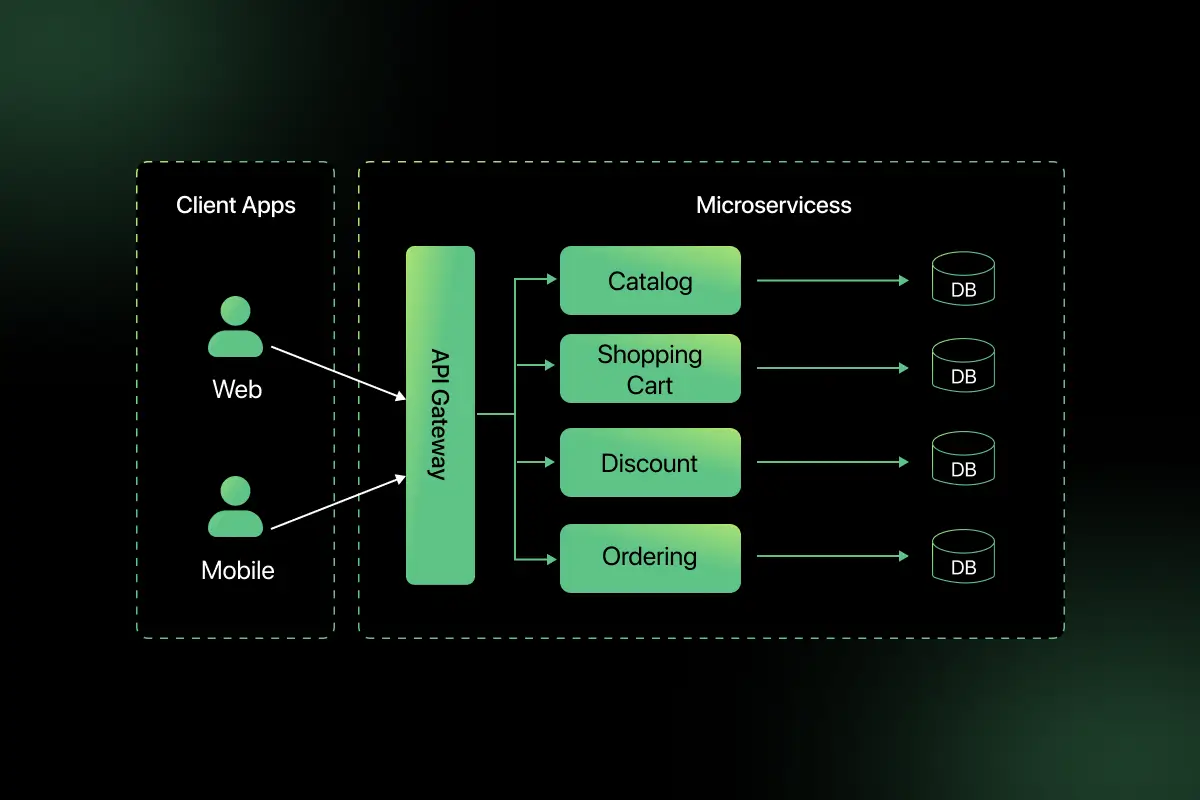
- Microservices-Based Web Architecture: In microservices-based web architecture, the backend is divided into multiple independent services. Each service handles a specific function such as authentication, payments, or product management. This approach improves scalability and fault isolation.
- Serverless Web Architecture: Serverless web architecture relies on cloud functions instead of dedicated servers. Backend logic runs in response to events, and infrastructure management is handled by the cloud provider. This model reduces operational overhead and supports automatic scaling.
Monolithic vs Microservices Web Architecture
Understanding the difference between monolithic and microservices web architecture helps in selecting the right approach based on application size and requirements.
| Factor | Monolithic Web Architecture | Microservices Web Architecture |
| Structure | The entire application is built as a single unified codebase | The application is divided into independent services handling specific functions |
| Scalability | The entire system must be scaled together | Individual services can be scaled independently |
| Deployment | Any change requires redeploying the whole application | Services can be deployed independently without affecting others |
| Performance | Can perform well for small to medium applications | Optimized for high traffic and distributed systems |
| Complexity | Easier to develop initially | Higher architectural and operational complexity |
| Best Use Case | Small to medium projects with limited features | Large-scale applications requiring flexibility and scalability |
Advantages and Limitations of Web Application Architecture
A well-designed web application architecture provides structure and control, but it also comes with certain challenges depending on the implementation model.
Advantages
- Structured design – Clear separation between presentation, application, and data layers improves organization and reduces confusion in large systems.
- Better scalability – Layered and distributed architectures allow applications to handle growing user traffic efficiently.
- Improved security – Separation of layers limits direct access to sensitive data and enables better authentication and authorization mechanisms.
- Easier maintenance – Modular design makes it simpler to update, debug, and enhance specific components without affecting the entire system.
- Performance optimization – Load balancing, caching, and efficient request handling improve response time and system reliability.
Limitations
- Scalability issues in monolithic systems – Traditional monolithic web architectures may struggle when traffic increases significantly.
- Security vulnerabilities – Poor configuration or exposed endpoints can introduce risks if layers are not properly secured.
- Network latency – Distributed components communicate over the network, which can increase response time in complex systems.
- Infrastructure dependency – Modern web architectures often depend on servers, cloud services, and load balancers, increasing operational overhead.
Modern Web Application Architecture Trends
Modern web applications are evolving with new technologies that improve scalability, speed, and automation.
Cloud Deployment: Applications are hosted on cloud platforms instead of physical servers. This allows easy scaling and better availability.
Containerization: Applications are packaged into containers for consistent deployment across environments. Containers make scaling and management easier.
API Driven Architecture: Systems are built around APIs to allow smooth communication between services and clients. This improves flexibility and integration.
Edge Computing: Data processing happens closer to users instead of a central server. This reduces latency and improves performance.
CI CD Pipelines: Continuous Integration and Continuous Deployment automate testing and releases. This enables faster and more reliable updates.
Real World Use Cases
Web application architecture plays a critical role in ensuring performance, reliability, and scalability across different industries.
E-commerce websites: Online stores handle product listings, payments, user accounts, and order tracking. A well-designed architecture ensures smooth transactions, secure payments, and high performance during peak traffic.
Banking portals: Banking systems require strong security, authentication, and data integrity. Structured architecture separates layers to protect sensitive financial information and maintain reliable operations.
Social media platforms: Social media applications manage large volumes of user data, posts, and real-time interactions. Scalable architecture supports millions of concurrent users efficiently.
Learning management systems: Educational platforms handle user registrations, course content, assessments, and analytics. Proper architecture ensures organized data flow and reliable access for students and instructors.
Important Concepts to Remember
- Difference between a web server and an application server
- Role of the load balancer
- Three-layer architecture in web applications
- Client side vs server side rendering
- When to use microservices in web apps
If you want to test your understanding of web application architecture concepts, try solving Web Application MCQ questions that cover client-server models, application layers, and system design basics.
These Web Application interview questions for practice help reinforce concepts commonly asked in technical interviews and software development roles.
Final Words
Web application architecture defines how web systems are structured to handle user requests efficiently. Proper layer separation improves scalability, security, and maintainability.
Choosing the right architecture depends on application size and performance requirements.
Explore More Architecture Blogs
- Database Management System
- Microservices
- REST API and API Gateway
- Distributed Systems
- OSI Security Model
- Cloud Computing
- Docker
- Kubernetes
- SAP
- SQL Server
- Spring Boot
- Data Warehouse
- Java
- Linux
- Angular
- Selenium
FAQs
Web application architecture is the structural design that defines how the client, server, and database interact to process user requests and deliver responses efficiently.
The main layers are the presentation layer, application layer, and data layer. Each layer has a specific role in handling user interaction, business logic, and data storage.
A web server handles HTTP requests and serves static content, while an application server processes business logic and interacts with the database.
Layered architecture improves scalability, security, and maintainability by separating responsibilities and reducing tight coupling between components.
Monolithic architecture builds the entire application as a single unit, while microservices architecture divides the system into independent services that can scale and deploy separately.
It uses techniques such as load balancing, caching, optimized database queries, and proper layer separation to ensure faster response times and better resource management.



Aarthy is a passionate technical writer with diverse experience in web development, Web 3.0, AI, ML, and technical documentation. She has won over six national-level hackathons and blogathons. Additionally, she mentors students across communities, simplifying complex tech concepts for learners.



Aarthy is a passionate technical writer with diverse experience in web development, Web 3.0, AI, ML, and technical documentation. She has won over six national-level hackathons and blogathons. Additionally, she mentors students across communities, simplifying complex tech concepts for learners.
Related Posts
Difference between Main memory and Secondary memory
Have you ever noticed that unsaved work disappears after a power failure, while your documents, photos, and applications remain available …

Warning: Undefined variable $post_id in /var/www/wordpress/wp-content/themes/placementpreparation/template-parts/popup-zenlite.php on line 1050
so far feels like...
