Distributed Systems Architecture Explained

Modern applications no longer run on a single machine. Large platforms such as e-commerce websites, streaming services, and banking systems operate across multiple servers to handle millions of users simultaneously.
Single server systems struggle to manage high traffic, large data volumes, and continuous availability requirements. As demand increases, relying on one machine creates performance bottlenecks and a higher failure risk.
Distributed systems architecture solves this by spreading workloads across multiple interconnected machines that work together as a single system. This approach improves scalability, reliability, and fault tolerance.
In this guide, you will understand the components, working flow, architectural models, key challenges, and real-world use cases of distributed systems architecture.
What is Distributed Systems Architecture?
Distributed systems architecture is a design model where multiple independent machines, called nodes, work together over a network to function as a single unified system.
- System Spread Across Multiple Nodes: Instead of running on one central server, the application is divided across several machines. Each node performs a specific task such as processing requests, storing data, or managing communication.
- Nodes Communicate Over a Network: All nodes are connected through a network and exchange information using communication protocols. This coordination allows them to handle tasks collectively.
- Work Together as a Single System: Although physically distributed, the system appears as one integrated application to users. The complexity of multiple machines is hidden behind a unified interface.
- Focus on Scalability and Fault Tolerance: Distributed systems are designed to handle growing workloads by adding more nodes and to continue functioning even if one or more nodes fail.
Key Characteristics of Distributed Systems
Distributed systems have specific properties that enable them to operate efficiently across multiple machines.
- Scalability: The system can handle increasing workloads by adding more nodes without significantly affecting performance.
- Fault Tolerance: If one node fails, other nodes continue operating, ensuring the system remains available and reliable.
- Concurrency: Multiple users and processes can access and modify the system simultaneously without disrupting overall functionality.
- Transparency: The system hides the complexity of distribution from users. It appears as a single unified system even though it runs on multiple machines.
- Consistency Models: Distributed systems define rules for how data remains consistent across nodes. These models determine how quickly updates are reflected across the system.
Core Components of Distributed Systems Architecture
Distributed systems architecture is built using multiple interconnected components that work together to deliver scalability and reliability.
- Nodes or Servers: Nodes are independent machines that perform specific tasks such as processing requests, storing data, or running services. Multiple nodes share the workload to improve performance and availability.
- Network Communication: Nodes communicate through a network using defined protocols. Reliable communication ensures data exchange, synchronization, and coordination across the system.
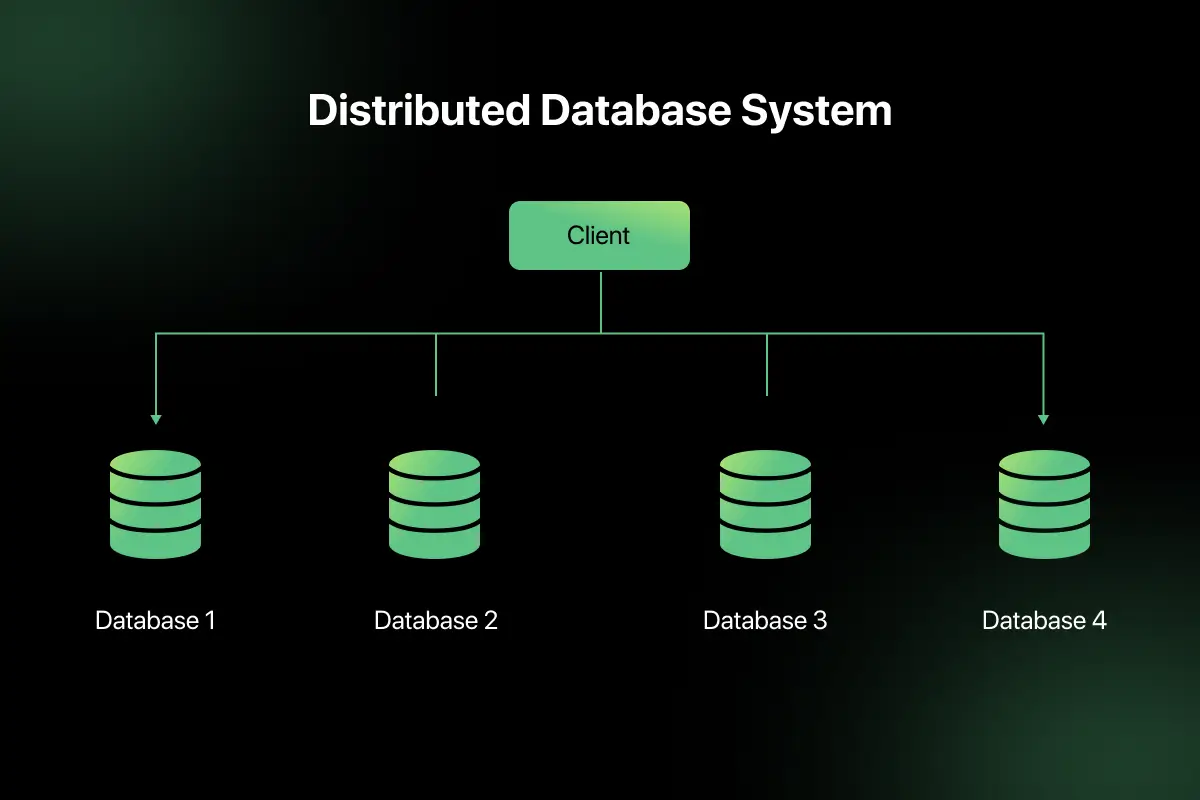
- Distributed Database: A distributed database stores data across multiple machines instead of a single server. This improves availability, scalability, and fault tolerance while managing large data volumes.
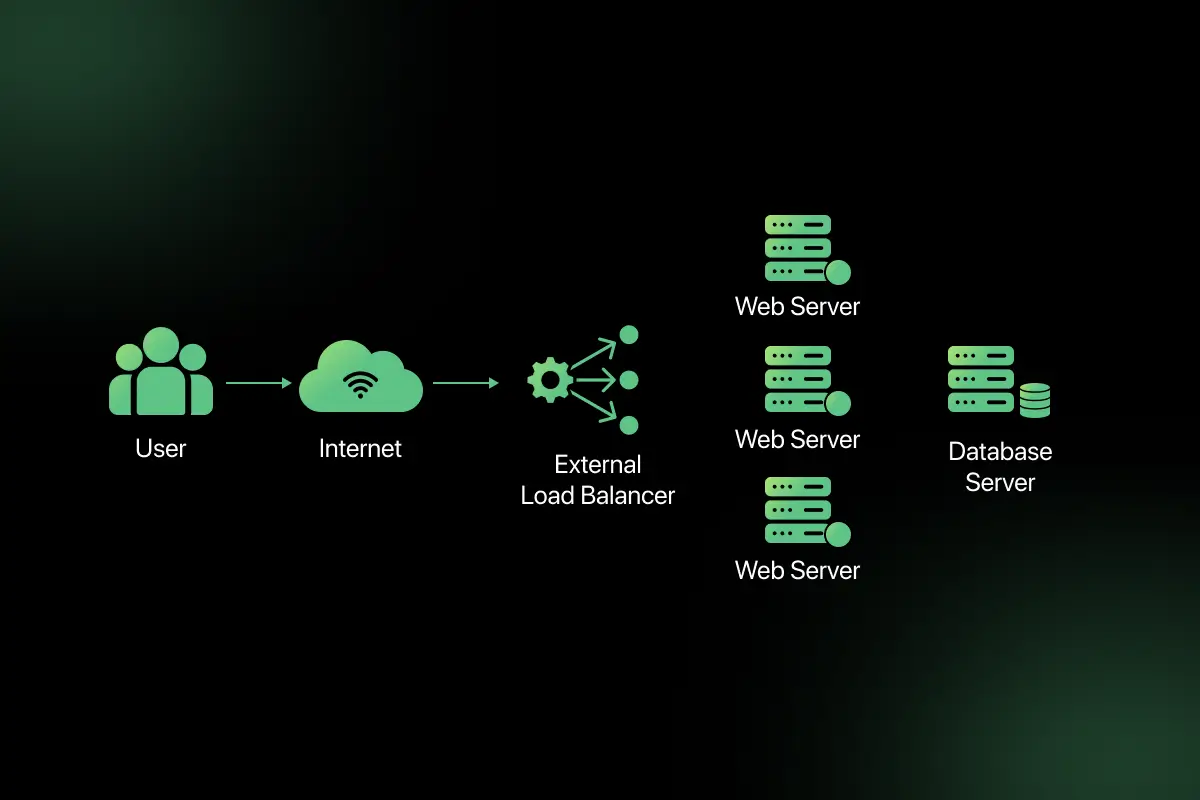
- Load Balancer: A load balancer distributes incoming traffic across multiple servers. It prevents overload on a single node and improves system performance and reliability.
- Coordination Service: A coordination service manages synchronization between nodes. It helps maintain consistency, handles leader election, and ensures proper communication among distributed components.
Distributed Systems Architecture Diagram and Working Flow
Learning the fundamentals of Systems design and distributed systems architecture involves understanding how multiple systems communicate, coordinate tasks, and manage data across networks.
Scenario: A user uploads a file to a cloud storage platform.
Step-by-Step Flow
- Request hits load balancer: The user uploads a file through a web interface. The request first reaches a load balancer that distributes traffic across available servers.
- Routed to available server: The load balancer forwards the request to one of the available application servers based on current load conditions.
- Data processed: The selected server validates the request, processes the file, and prepares it for storage.
- Stored in distributed storage: The file is stored across multiple storage nodes in a distributed database or storage system to ensure redundancy and reliability.
- Response returned: Once the upload is successful, a confirmation response is sent back through the server and load balancer to the user.
Types of Distributed System Architecture
Distributed systems can be organized in different architectural models depending on how nodes interact and share responsibilities.
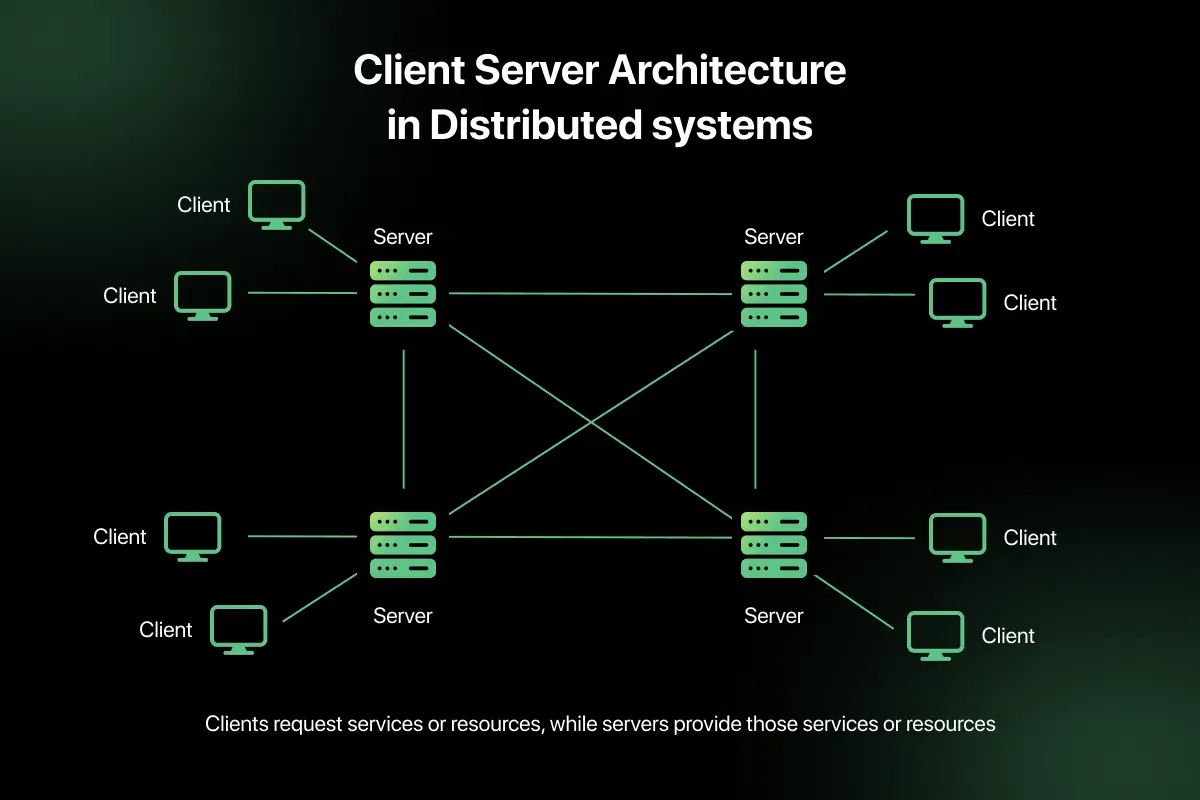
- Client-Server Model: In the client-server model, multiple clients send requests to a centralized server or group of servers. The server processes requests and returns responses. This is one of the most common distributed system models used in web applications.
- Peer-to-Peer Model: In the peer-to-peer model, all nodes act both as clients and servers. Each node can request and provide services to other nodes. This model distributes control and reduces dependency on a central server.
- Three-Tier Distributed Model: The three-tier distributed model separates the system into the presentation layer, the application layer, and the data layer. Each layer may run on different machines, improving scalability and maintainability.
- Microservices-Based Distributed Model: In a microservices-based distributed model, the application is divided into independent services that run on separate nodes. Each service communicates over a network and can scale independently.
Centralized vs Distributed Architecture
Understanding the difference between centralized and distributed architecture helps in selecting the right system design based on scale and reliability requirements.
| Factor | Centralized Architecture | Distributed Architecture |
| Structure | All processing and data are handled by a single central server | Processing and data are spread across multiple interconnected nodes |
| Scalability | Limited scalability, upgrading requires improving the main server | Highly scalable by adding more nodes to the system |
| Fault Tolerance | Failure of the central server can stop the entire system | Failure of one node does not affect the entire system |
| Performance | May face bottlenecks under heavy load | Load is distributed, improving overall performance |
| Complexity | Easier to design and manage initially | More complex due to coordination between multiple nodes |
| Cost | Lower initial setup cost, but expensive to scale vertically | Higher setup cost, but cost-effective for large-scale systems |
Advantages and Challenges of Distributed Systems Architecture
Distributed systems architecture offers strong scalability and reliability, but it also introduces operational challenges that require careful design.
Advantages
- High scalability – The system can handle increasing workloads by adding more nodes instead of upgrading a single machine.
- Improved reliability – If one node fails, other nodes continue functioning, reducing system downtime.
- Better resource utilization – Workloads are distributed across multiple machines, ensuring efficient use of computing resources.
- Geographic distribution – Services can be deployed across different locations to reduce latency and improve availability for global users.
Challenges and Limitations
- Network latency – Communication between distributed nodes happens over a network, which can introduce delays.
- Data consistency issues – Keeping data synchronized across multiple nodes is complex, especially during updates.
- Distributed failures – Failures may occur in unpredictable ways across different nodes, making detection difficult.
- Debugging complexity – Identifying and fixing issues across multiple machines is more challenging than in centralized systems.
- Security risks – Increased communication between nodes can create additional security vulnerabilities if not properly managed.

Real World Use Cases
Distributed systems architecture is widely used in large-scale applications where scalability, availability, and reliability are critical.
Cloud storage platforms: Cloud storage services store and manage data across multiple servers and locations. A distributed model ensures high availability, redundancy, and fast access even if one storage node fails.
Banking transaction systems: Banking systems process thousands of transactions simultaneously. Distributed architecture helps maintain reliability, fault tolerance, and continuous availability during peak loads.
E-commerce systems: Online shopping platforms handle product searches, payments, and order processing for millions of users. Distributing workloads across multiple servers improves performance and prevents system overload.
Social media platforms: Social media applications manage massive volumes of user data, posts, and real-time interactions. Distributed systems allow them to scale globally while maintaining responsiveness and uptime.
In all these cases, a distributed model fits because it supports large user bases, ensures high availability, and reduces the risk of complete system failure.
Important Concepts to Remember
- CAP theorem
- Horizontal vs vertical scaling
- Fault tolerance
- Distributed consensus
- Data replication
If you want to test your understanding of distributed systems architecture concepts, try solving DBMS MCQs covering database scaling, distributed storage, and data consistency fundamentals used in large-scale systems.
Also, system design interview questions for practice help reinforce concepts commonly asked in database design, system architecture, and backend development interviews.
Final Words
Distributed systems architecture enables scalable and reliable applications by spreading workloads across multiple nodes. It improves availability and performance but increases system complexity.
Proper design is critical for maintaining consistency and fault tolerance.
Explore More Architecture Blogs
- Database Management System
- Microservices
- Web Application
- REST API and API Gateway
- OSI Security Model
- Cloud Computing
- Docker
- Kubernetes
- SAP
- SQL Server
- Spring Boot
- Data Warehouse
- Java
- Linux
- Angular
- Selenium
FAQs
Distributed systems architecture is a design model where multiple interconnected machines work together as one system to improve scalability, availability, and fault tolerance.
Centralized architecture relies on one main server, while distributed architecture spreads workloads across multiple nodes for better scalability and reliability.
Distributed systems scale horizontally by adding more nodes, allowing applications to handle increased traffic without overloading a single server.
CAP theorem states that a distributed system can guarantee only two of three properties: consistency, availability, and partition tolerance at the same time.
Common challenges include network latency, data consistency issues, distributed failures, complex debugging, and maintaining secure communication across multiple nodes.
Distributed systems are used in cloud platforms, banking systems, e-commerce websites, and social media platforms to handle large-scale traffic efficiently.



Aarthy is a passionate technical writer with diverse experience in web development, Web 3.0, AI, ML, and technical documentation. She has won over six national-level hackathons and blogathons. Additionally, she mentors students across communities, simplifying complex tech concepts for learners.



Aarthy is a passionate technical writer with diverse experience in web development, Web 3.0, AI, ML, and technical documentation. She has won over six national-level hackathons and blogathons. Additionally, she mentors students across communities, simplifying complex tech concepts for learners.
Related Posts
Difference between Main memory and Secondary memory
Have you ever noticed that unsaved work disappears after a power failure, while your documents, photos, and applications remain available …
Warning: Undefined variable $post_id in /var/www/wordpress/wp-content/themes/placementpreparation/template-parts/popup-zenlite.php on line 1050
so far feels like...
