How to start a career in Full Stack Development
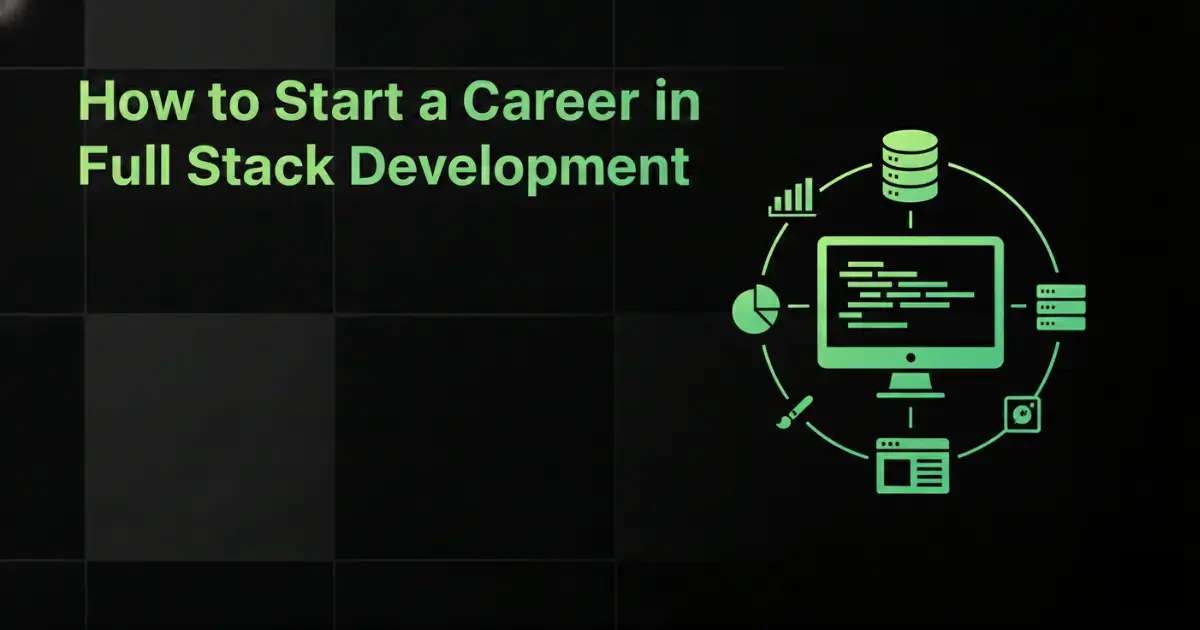
Ever wondered how complete websites and applications are built from front-end design to back-end logic? Full-stack development focuses on building and managing both sides of an application.
Many students and freshers are curious about how to start a career in full-stack development, but feel confused about technologies and the learning order. The good news is that this field values practical skills and project experience.
In this blog, we explain how to start a career in full-stack development with a clear roadmap, required skills, job roles, and steps to get your first job.
What Is Full Stack Development?
Full-stack development involves building both the front end and back end of a web application. It includes creating user interfaces, handling server-side logic, managing databases, and connecting all components to work together
Full-stack developers work with client-side technologies, server-side frameworks, APIs, and databases to build complete and functional applications. Today, full-stack development is widely used in startups, product companies, and service-based organizations.
Why Choose Full Stack Development as a Career?
Full-stack development is a popular career choice because companies prefer developers who can handle end-to-end application development. It offers strong demand, flexible roles, and long-term growth opportunities.
- High Demand Across Industries: Companies across tech, finance, e-commerce, and startups actively hire full-stack developers.
- Strong Career Growth: You can grow from junior developer roles to senior developer, tech lead, or architect positions.
- Skill-Based Career Path: Hiring decisions focus more on coding skills and project experience than degrees alone.
- Wide Technology Exposure: Full-stack developers work with multiple technologies, improving adaptability and learning speed.
- Good Salary Potential: Full-stack roles often offer competitive salaries due to their broad skill requirements.
- Future Ready Career: As web applications continue to grow, full-stack development remains relevant and evolving.
Who Can Start a Career in Full Stack Development?
A career in full-stack development is suitable for anyone interested in building applications and solving technical problems.
- Students and Fresh Graduates
- Engineering and IT Graduates
- Career Switchers from Non-Tech Backgrounds
- Working Professionals Looking to Upskill
- Backend or Frontend Developers: Expanding Skills
- Anyone Willing to Learn Coding and Development
Step-by-Step Roadmap to Start a Full Stack Development Career
This roadmap helps you build skills in the right order and become job-ready with practical knowledge.
Step 1: Learn Programming Basics
Start with basic programming concepts such as variables, loops, functions, and logic using a language like JavaScript or Python. This helps you build problem-solving skills and understand how applications work internally.
Step 2: Learn Front-End Development
Learn HTML, CSS, and JavaScript to build user interfaces and responsive web pages. This step helps you understand how users interact with applications on browsers and mobile screens.
Step 3: Learn Backend Development
Learn server-side programming using technologies like Node.js, Java, or Python, and understand how APIs work. Backend development helps you handle business logic, authentication, and data flow between systems.
Step 4: Work with Databases
Learn how to store, retrieve, and manage data using databases such as MySQL or MongoDB. Database knowledge helps you build applications that can handle real user data efficiently.
Step 5: Build Full Stack Projects
Create complete applications that include front-end, backend, and database integration. Full-stack projects help demonstrate your practical skills and improve your chances of getting shortlisted for interviews.
Core Skills Required for Full Stack Development
To succeed in full-stack development, you need strong technical skills along with problem-solving and communication abilities.
Technical Skills
- HTML, CSS, and JavaScript: These are essential for building and styling user interfaces.
- Frontend Frameworks: Knowledge of frameworks like React helps build dynamic and scalable interfaces.
- Backend Programming: Backend skills help handle server logic, APIs, and business rules.
- Database Management: Understanding databases helps manage application data effectively.
- Version Control Systems: Tools like Git help track changes and collaborate with teams.
- Basic System and API Knowledge: Understanding APIs and system flow helps integrate application components.
Soft Skills
- Problem-Solving Skills: Development requires breaking down problems and finding efficient solutions.
- Logical Thinking: Logical reasoning helps write clean and optimized code.
- Communication Skills: Clear communication supports teamwork and requirement understanding.
- Time Management: Managing tasks and deadlines is important during development cycles.
- Continuous Learning Mindset: Technologies change frequently, making ongoing learning essential.
Certifications That Help in Full Stack Development
Certifications help structure your learning and improve your credibility for entry-level roles.
- Full Stack Development Certification from GUVI Zen Class: This certification helps you learn front-end, backend, databases, and real-world projects with placement-focused training.
- Meta Front End Developer Professional Certificate: This certification helps build strong front-end development skills using modern tools.
- IBM Full Stack Software Developer Certificate: This certification covers frontend, backend, and cloud basics suitable for beginners.
- FreeCodeCamp Full Stack Certifications: This certification helps learners practice coding through hands-on projects.
Entry-Level Full Stack Development Job Roles
Entry-level roles help you gain experience by working on real applications and codebases.
- Junior Full Stack Developer: A junior full-stack developer works on both frontend and backend tasks under guidance.
- Frontend Developer: A frontend developer focuses on building user interfaces and improving user experience.
- Backend Developer: A backend developer handles server logic, APIs, and database interactions.
- Software Developer Trainee: A trainee role helps freshers learn development processes and tools.
- Web Developer: A web developer builds and maintains websites and web applications.

How to Get Your First Full Stack Development Job
Getting your first role requires consistent practice and a strong project portfolio.
- Build Strong Coding Fundamentals: Focus on clean code, logic building, and understanding concepts.
- Create End-to-End Projects: Projects that show full-stack skills increase hiring chances.
- Maintain a GitHub Portfolio: Sharing code publicly helps recruiters assess your skills.
- Apply for Entry-Level Roles Strategically: Target roles that match your current experience level.
- Prepare for Technical Interviews: Practice coding problems and project explanations.
- Keep Learning and Applying Consistently: Regular improvement and applications lead to better results.
Final words
A career in full-stack development is built through consistent coding, hands-on projects, and structured learning. With the right roadmap and practice, full-stack development offers strong growth and long-term opportunities in tech.
Not sure how to start in full-stack development or which technologies to focus on?
Book a free career guidance call to get clarity on the right learning path and job roles.
Explore More Resources
FAQs
You can start a career in full-stack development by learning programming basics, frontend technologies, backend development, and building complete projects.
You do not need a computer science degree because companies focus more on coding skills, projects, and practical experience.
Skills required include frontend development, backend programming, databases, version control, and problem-solving.
Becoming job-ready usually takes four to eight months, depending on learning pace and project practice.
Entry-level roles include junior full-stack developer, frontend developer, backend developer, and web developer.
Certifications are not mandatory, but they help structure learning and improve job shortlisting when combined with projects.


Aarthy is a passionate technical writer with diverse experience in web development, Web 3.0, AI, ML, and technical documentation. She has won over six national-level hackathons and blogathons. Additionally, she mentors students across communities, simplifying complex tech concepts for learners.



Aarthy is a passionate technical writer with diverse experience in web development, Web 3.0, AI, ML, and technical documentation. She has won over six national-level hackathons and blogathons. Additionally, she mentors students across communities, simplifying complex tech concepts for learners.
Related Posts
Different Positions in a Company Explained (Roles, Salary & Career Path)
Different positions in a company range from entry-level interns to the Chief Executive Officer, and understanding this hierarchy is the …

Warning: Undefined variable $post_id in /var/www/wordpress/wp-content/themes/placementpreparation/template-parts/popup-zenlite.php on line 1050
so far feels like...
